
Terms such as “marine grade”, “FEQ”, “A grade” and “premium teak” are used widely in the timber market, often without a precise definition. For a yacht builder, that is not enough.
A useful grade description should tell the buyer what is actually expected in the finished component: heartwood content, grain orientation, growth-ring character and allowable visible defects.
Nauteaka's current exterior yacht decking grade
For exterior yacht decking, Nauteaka's current premium reference is an AAA quartercut specification based on:
- 100% heartwood;
- quartercut / quarter-sawn grain orientation;
- approximately 5–15 growth rings per inch;
- no knots in the finished face;
- no sapwood;
- no visible surface defects on the finished material.
For exterior yacht decking, Nauteaka does not currently position a lower second grade as a normal cheaper alternative. If a project wants a different acceptance standard, that specification should be discussed explicitly rather than assumed.
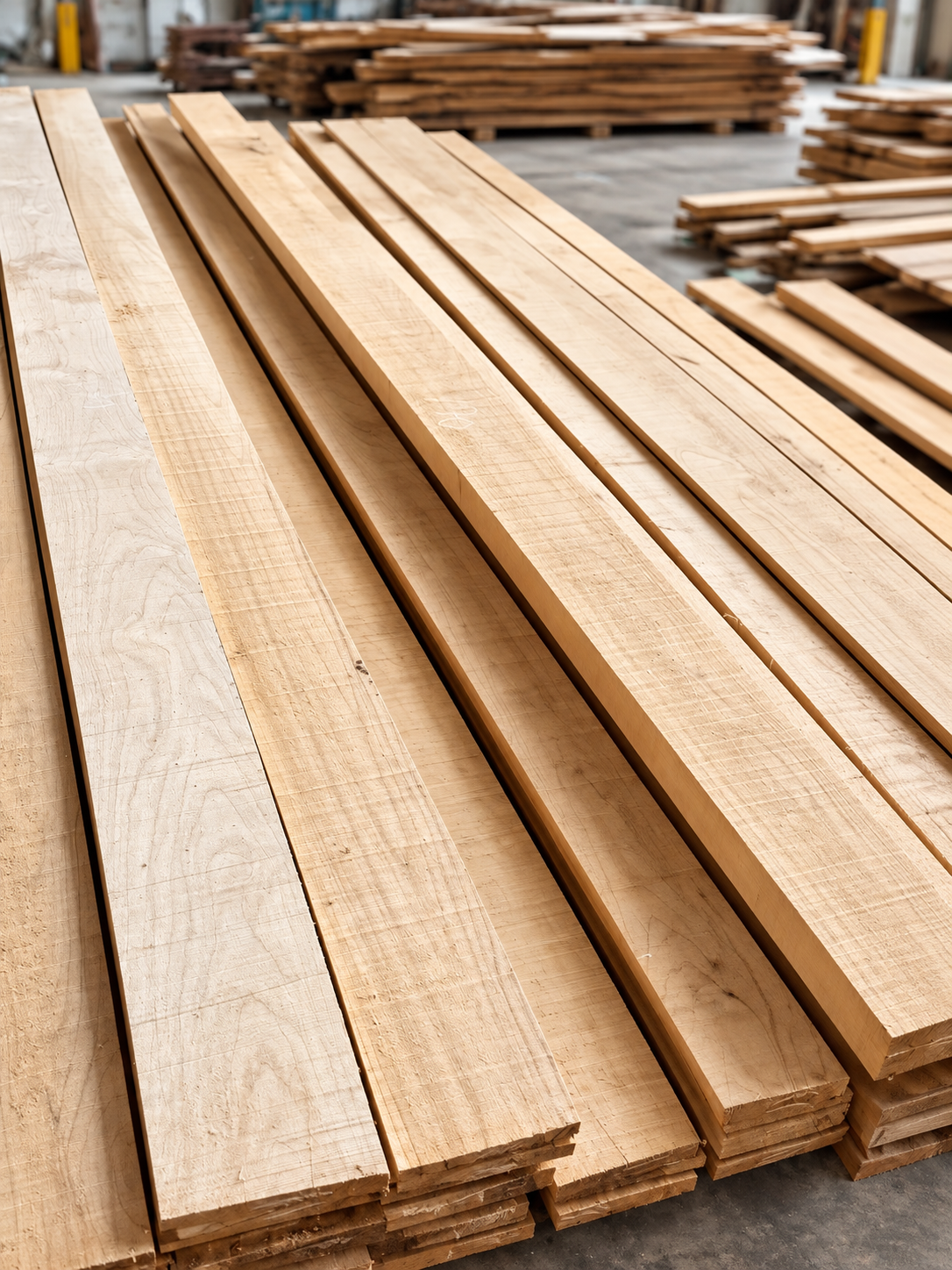
Why heartwood matters
Heartwood is the mature inner wood of the tree. In premium yacht teak, the finished material is selected to exclude sapwood, which differs visually and materially from the heartwood expected in a high-quality teak deck.
Specifying 100% heartwood is therefore more useful than a vague phrase such as “good colour”. It creates a clear acceptance criterion that can be applied during sorting and final QC.
Quartercut is a cutting requirement, not merely a grade label
A board can be clean and defect-free without being quartercut. Grain orientation is a separate requirement.
For premium yacht decking, Nauteaka selects material for the straighter, predominantly vertical grain associated with quartercut or quarter-sawn production. This is one of the reasons why recovery is lower than conventional sawing: material that does not meet the required orientation cannot simply be included because the face looks attractive.
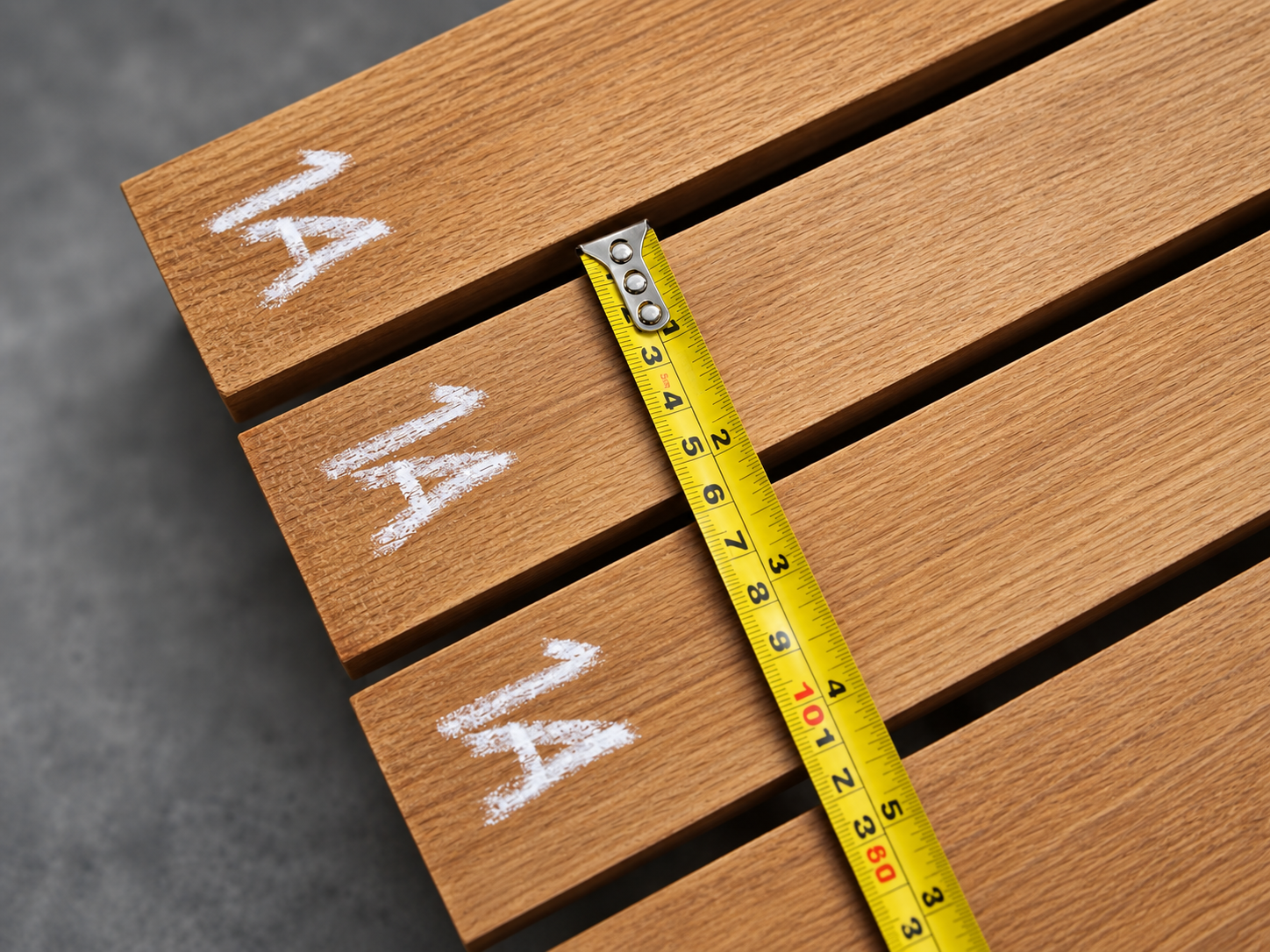
What does 5–15 growth rings per inch mean?
Growth-ring count is one reference used to describe the visual density of the grain. Nauteaka's current AAA exterior decking reference is approximately 5–15 growth rings per inch.
This should not be treated as the only indicator of quality. A professional yacht teak specification still needs to consider heartwood, grain orientation, defects, moisture condition, dimensions and machining together.
Knots, sapwood and surface defects
For the finished exterior decking face, knots, sapwood and visible surface defects are excluded from the current AAA specification.
That does not mean the raw log contains no natural defects. It means those portions are removed or diverted during production so they do not enter the finished yacht-decking selection.
Why visual samples alone are not enough
A sample board can show colour and grain, but it cannot fully represent a commercial order. A buyer should also define:
- grade / acceptance criteria;
- quartercut requirement;
- finished dimensions;
- length mix;
- moisture target;
- edge profile;
- margin and border requirements;
- documentation and destination.
The purpose of a specification is to make quality repeatable across a shipment, not merely impressive in one sample.
Grade should be agreed before the price
Two quotations for “teak decking” can differ dramatically because they are not actually quoting the same material. One may allow sapwood, mixed grain or defects that another excludes.
For a useful comparison, buyers should first normalize the technical specification. Only then does price become meaningful.
For Nauteaka's current exterior yacht decking requirements, visit Quartercut Teak Decking or request a project review.