
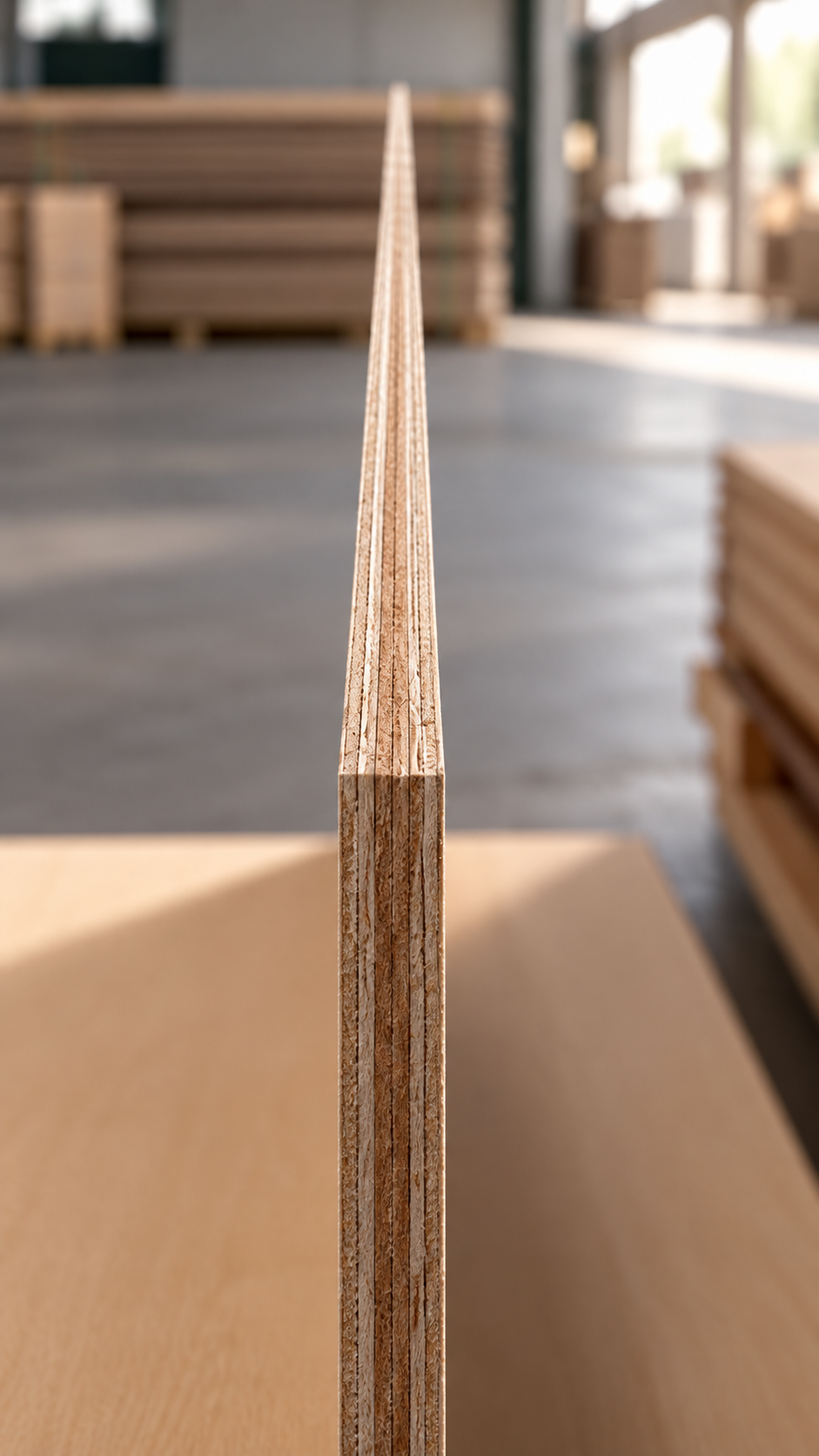
Cork-based plywood constructions are attracting interest in yacht interiors because cork is lightweight and can contribute useful acoustic, thermal and vibration-damping characteristics. That makes the material relevant to a range of marine-industry applications.
But there is an important technical distinction that should be made clearly from the beginning: cork sheet plywood is not marine-grade plywood, and it should not be described as BS-1088 marine plywood or BS 6566 marine plywood.
What is cork sheet plywood?
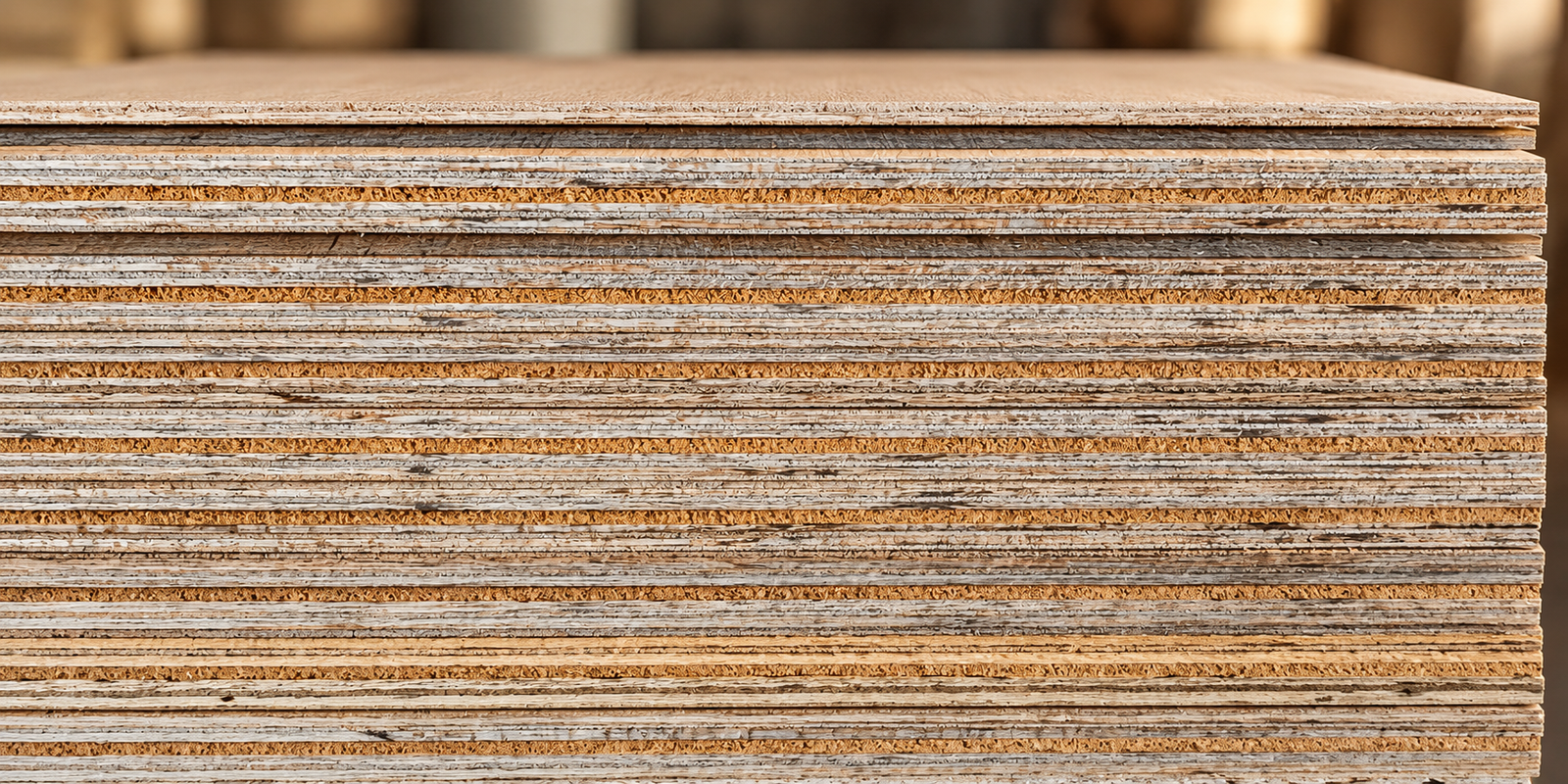
Cork sheet plywood is a composite panel construction that incorporates a cork layer together with plywood or veneer components. The exact build can vary according to the application: cork thickness, face material, total panel thickness and bonding system can all be adjusted as part of a custom panel specification.
The cork layer changes the behaviour of the panel. Compared with a conventional all-wood plywood construction, it can add properties that are useful where comfort, vibration, sound or insulation matter.
Why it should not be called marine plywood
The distinction is not semantic. Conventional marine plywood is defined by a technical standard and by the performance of the plywood construction, veneers and bonding system.
Current factory clarification for the cork sheet plywood available through Nauteaka is explicit: the product would not pass the boiling test required for marine plywood grade. It therefore must not be marketed as:
- marine plywood;
- BS-1088 marine plywood;
- BS 6566 marine plywood;
- marine-grade plywood.
A material can be used within the marine industry without being marine plywood. Keeping those two ideas separate protects designers, yards and buyers from specifying the wrong panel for a critical application.
Where cork sheet plywood can make sense on a yacht
Acoustic applications
Cork can contribute to sound and vibration control within an interior assembly. This makes cork-based panels relevant to partitions, selected interior linings and other areas where the designer is trying to reduce transmitted noise or resonance.
Vibration reduction
The cellular structure of cork can help absorb and dissipate vibration within a layered system. On a yacht, this can be attractive around interior fit-out zones where machinery, movement or structure-borne vibration affects comfort.
Thermal insulation
Cork has insulating characteristics that can be useful in selected interior panel assemblies. The practical result depends on the complete build-up, cork thickness and installation method rather than on the cork layer alone.
Flooring and underlayer applications
Cork-based constructions can also be considered in flooring systems and other layered interior applications where cushioning, insulation or vibration behaviour is valuable.
Where conventional BS-1088 marine plywood remains the reference
For applications that genuinely require marine-grade plywood, the correct solution is a properly specified and documented BS-1088 marine plywood construction rather than relabelling a cork panel.
The choice between conventional marine plywood and cork sheet plywood should therefore be based on application, required standard and performance objective.
Ask what the panel needs to do before selecting the material
- Where will the panel be installed?
- Is it structural or non-structural?
- What moisture exposure is expected?
- Are acoustic or vibration properties important?
- Is thermal insulation a priority?
- What visible face is required?
- What certification or technical standard is required?
- What total thickness and sheet size are needed?
Once those requirements are clear, the correct panel family becomes much easier to identify.
Marine use does not automatically mean marine grade
Many materials are used on board without being classified as marine plywood. Interior decorative veneers, insulation products, flooring layers, acoustic materials and lightweight cores can all have legitimate marine-industry applications.
The responsible approach is to describe each product accurately and let the design team decide whether its documented properties are appropriate for the intended use.
Nauteaka's approach to cork-based panels
Nauteaka treats cork sheet plywood as a specialty panel solution rather than as a substitute label for BS-1088. The exact construction can be reviewed around the project's requirements, including face material, cork layer, total thickness and intended application.
To compare conventional marine plywood with a cork-based panel for your project, visit our marine plywood page or send Nauteaka the intended application, thickness and quantity.