
Quartercut teak decking is not created simply by taking ordinary teak boards and machining them to yacht dimensions. The defining characteristic — predominantly straight, vertical grain — begins with the way the log is selected and sawn.
For yacht builders and refit yards, understanding that production sequence helps explain why quartercut teak has different availability, recovery and pricing behaviour from conventional flat-sawn timber.
1. Log selection comes first
The process begins with genuine teak logs suitable for professional marine production. The mill must consider diameter, shape, defects, heartwood recovery and how the log can be broken down to obtain the required grain orientation.
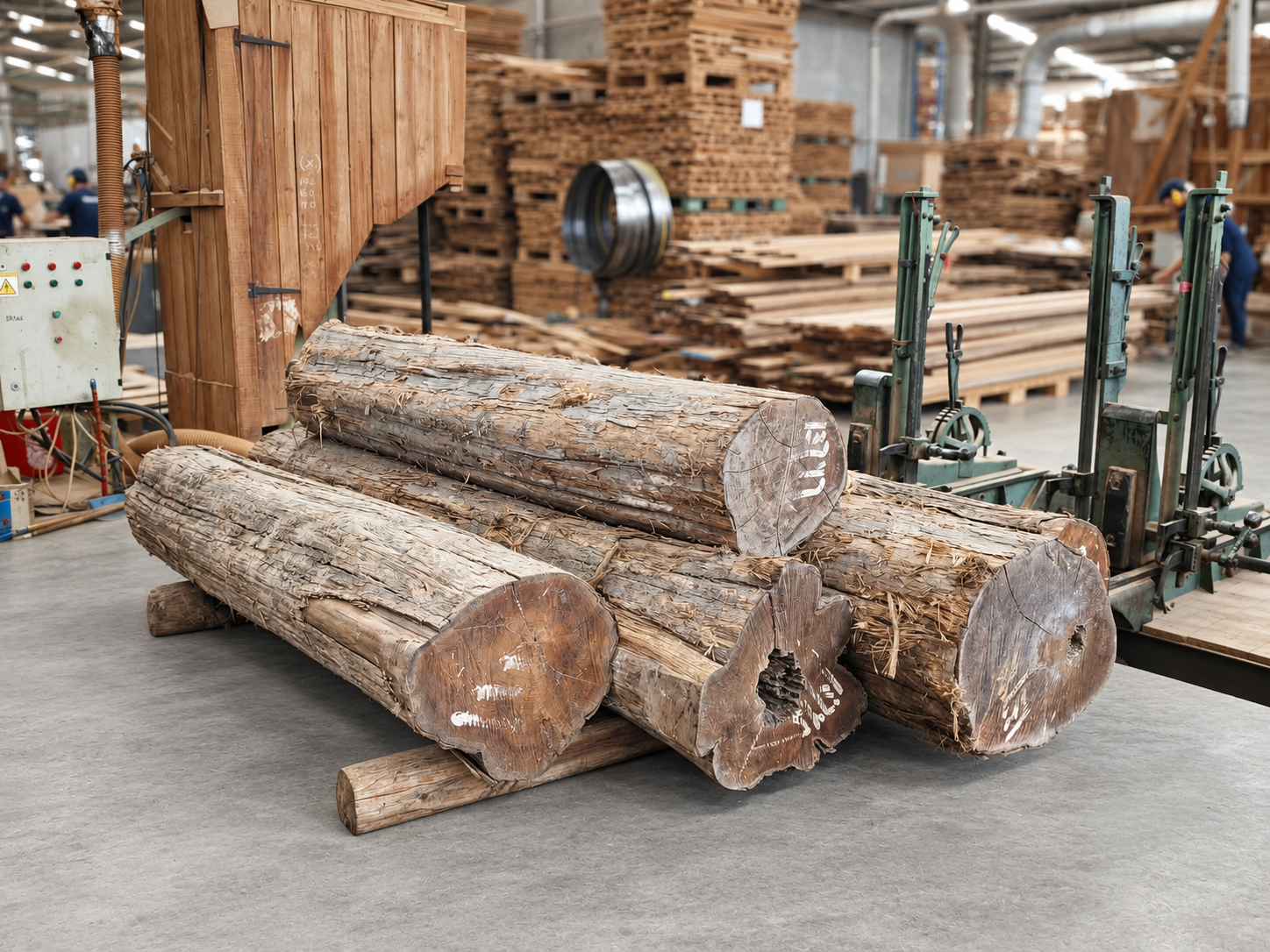
Wide margin boards, long components and strict vertical-grain requirements all increase selection pressure. A specification that looks simple on a drawing can therefore have a large effect on raw-material recovery.
2. Sawing orientation determines the grain
Quartercut, quarter-sawn and vertical-grain teak are terms used internationally for material cut so that the growth-ring orientation produces the straighter grain associated with premium yacht decking.
The aim is not a decorative effect alone. Grain orientation influences dimensional behaviour across the width of the board and creates the consistent visual rhythm expected on a high-end yacht deck.

3. Recovery is managed around the finished specification
A mill cannot recover every part of a log as premium quartercut decking. Boards that do not meet the required orientation, face quality or dimensions are separated into other uses or categories.
This is why thickness, width and length should be considered together. Thin profiles increase proportional machining loss. Wide margins require larger quartercut sections. Long lengths reduce the number of pieces that can be recovered from a given log.
4. Boards are separated and visually checked
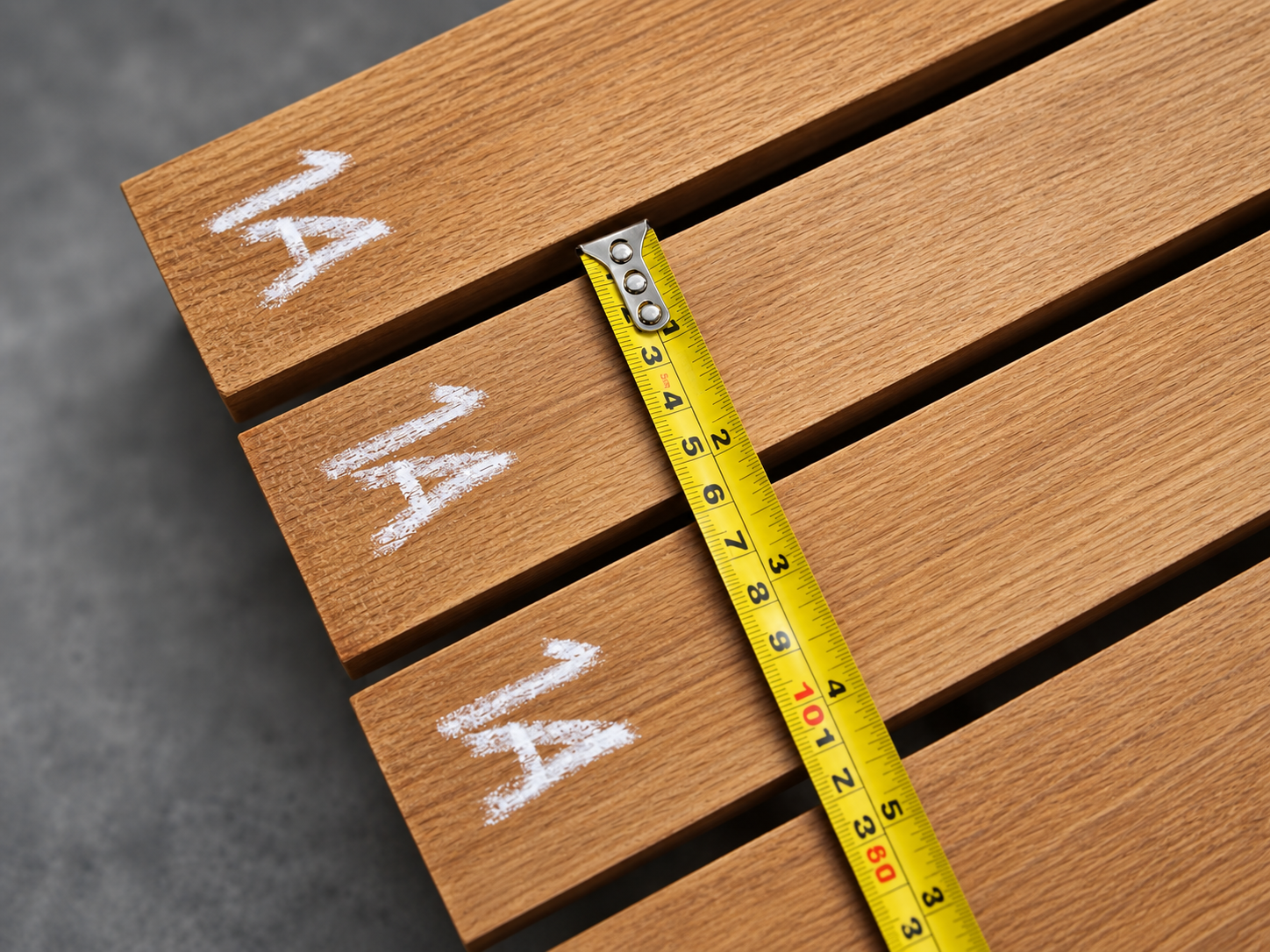
After primary sawing, material is sorted according to grain orientation, dimensions and visible quality. For exterior yacht decking, Nauteaka's current premium specification is based on AAA quartercut heartwood with no knots, sapwood or visible surface defects on the finished material.
5. Kiln drying is part of dimensional control
Professional yacht teak is kiln dried to the moisture target agreed for the order. Drying is not simply a final administrative step: it affects machining stability, movement and the condition in which the material reaches the buyer.
The required target should be confirmed with the project specification, destination and intended installation conditions rather than assumed from a generic timber number.
6. Machining creates the final component
Depending on the order, material can be supplied as square-edged S4S blanks or machined to a project-specific profile. For rebated caulking profiles, Nauteaka requires the buyer's drawing confirming rebate depth and edge geometry before production.
There is no universal rebate profile that should be assumed for every yacht yard. A drawing prevents ambiguity between supplier and installer.
7. Final sorting is as important as sawing
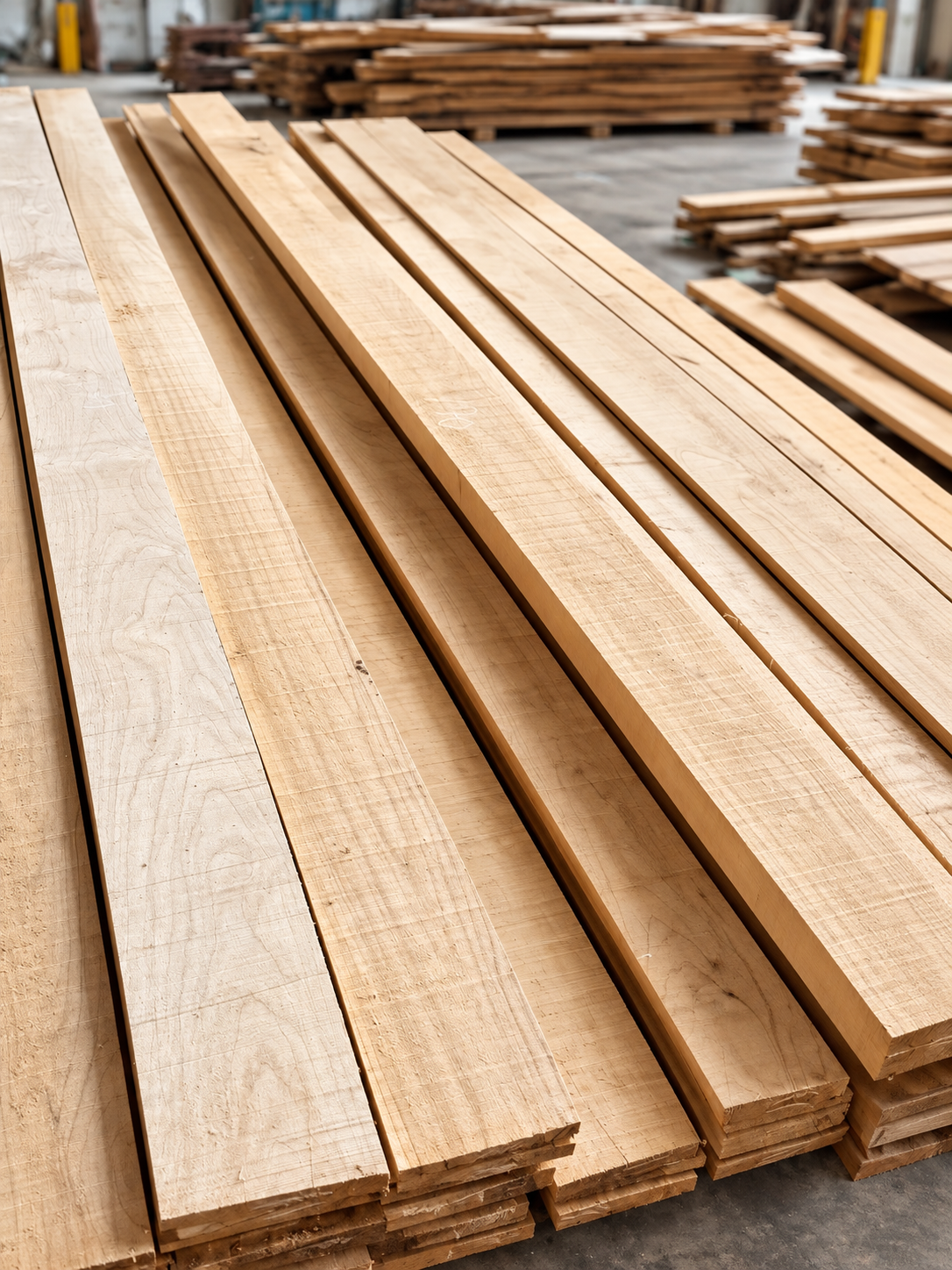
Before packing, the order must be checked against the agreed dimensions, length mix, grain selection and appearance criteria. This is particularly important when one order combines deck strips, margin boards and custom pieces.
Why production knowledge matters to yacht buyers
Understanding the manufacturing process helps buyers write specifications that are demanding where they need to be and flexible where flexibility creates better recovery.
That can mean accepting a practical random-length mix, separating narrow deck strips from wide margin requirements, or choosing a production-efficient thickness where the yacht design allows it.
The goal is not to reduce quality. It is to align yacht design requirements with the physical reality of quartercut teak production.
For current specifications, visit Nauteaka Quartercut Teak Decking or send us your yacht deck requirements.