
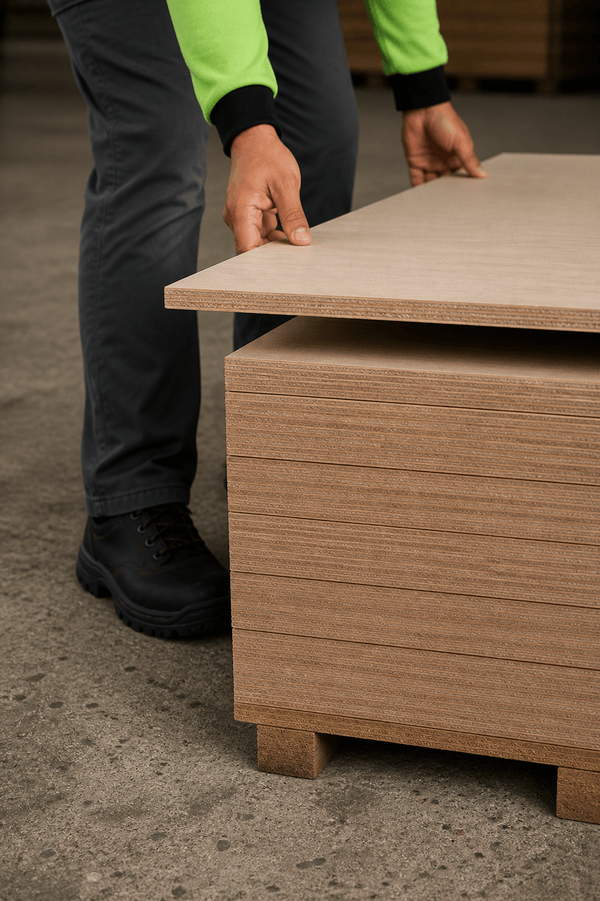
Marine plywood discussions often start with thickness and sheet size. Professional yacht buyers should add another question much earlier in the conversation: how many premium faces does the application actually require?
For visible cabinetry, furniture, bulkheads or interior surfaces, the face requirement can materially affect how a plywood order is produced. A panel with two premium faces demands more high-grade face veneer than a construction where only one side remains visible in the finished yacht.
What is a double-face panel?
A double-face panel uses quality face material on both sides of the sheet. This is appropriate where both surfaces are visible, where either side may be exposed during fabrication, or where the project specification explicitly requires matched premium faces.
For conventional BS-1088 marine plywood, the complete panel specification must meet the relevant requirements. Face quality is only one part of that specification; core construction, veneers, bonding and other technical requirements matter as well.
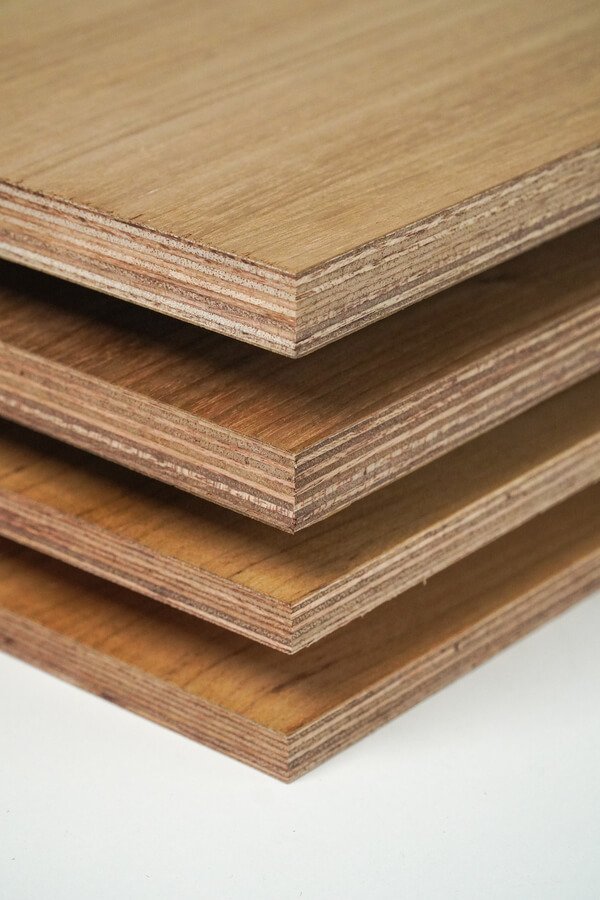
What is a one-face or alternative-back construction?
A one-face construction is designed around an application where one premium face is required but the reverse side is concealed, secondary or subject to a different visual requirement.
This can be useful in yacht interiors where the installed panel has a clearly defined visible side. By reducing the amount of premium face veneer required on every sheet, the factory may be able to improve recovery and production flexibility.
The important qualification is that “one-face” is a face specification, not automatically a technical standard. A one-face or alternative-back product should not be described as BS-1088 marine plywood unless the supplied construction actually complies with the relevant standard and is supported by the required documentation.
Why face-grade veneer can constrain supply
High-quality face veneer depends on the quality of the incoming logs and the proportion of each log that can be converted into acceptable visible material. Two premium faces per panel increase that requirement across the whole production run.
For a small project, the difference may be manageable through stock selection. For a buyer requiring repeated container volumes, face-grade yield can become a recurring production constraint.
When double-face is the right choice
- Freestanding furniture or joinery where both faces remain visible.
- Panels that may be reversed during fabrication.
- High-end interiors where both sides require the same appearance.
- Applications where the approved technical specification requires matched face quality.
- Distribution stock intended for multiple unknown end uses.
In these cases, reducing the back-face quality simply to improve price would be the wrong decision.
When one premium face may be enough
One-face or alternative-back construction may make sense when the reverse side is permanently concealed or where a secondary back specification is technically acceptable.
Examples can include selected fixed interior panels, some cabinetry components, backing applications and other fit-out elements where the exposed face carries the visual requirement and the reverse side does not.
The final decision should be made by the buyer, designer, yard or naval architect based on the actual use. Nauteaka can then review whether an appropriate panel construction is available from production.
Teak face, Meranti face and project-specific veneers
Professional yacht interiors may also require different face combinations. Depending on production availability, constructions can be discussed using Meranti faces, teak veneer on one face with Meranti on the reverse, or teak-faced panels for more visible applications.
These should be treated as project-specific products. Veneer species, face count, total thickness, sheet format, bonding and required standard all need to be confirmed together before a quotation is considered final.
Do not start by asking for the “best plywood”
There is no universal best panel for every part of a yacht. A more useful procurement question is: what does this specific panel need to do?
- Interior or exterior use.
- Structural or non-structural role.
- Whether one or both faces remain visible.
- Required face veneer species.
- Required technical standard.
- Thickness and sheet size.
- Quantity and recurring volume.
- Destination market and documentation requirements.
Better specification can be more valuable than a simple discount
When a buyer is trying to reach a target cost, the first reaction should not always be to discount the same product. If the application allows it, changing from an unnecessarily high face specification to a more efficient construction may create a better commercial result while preserving the performance actually required.
For current panel constructions, sizes and professional supply requirements, visit Nauteaka Marine Plywood or send us the intended application and panel specification.